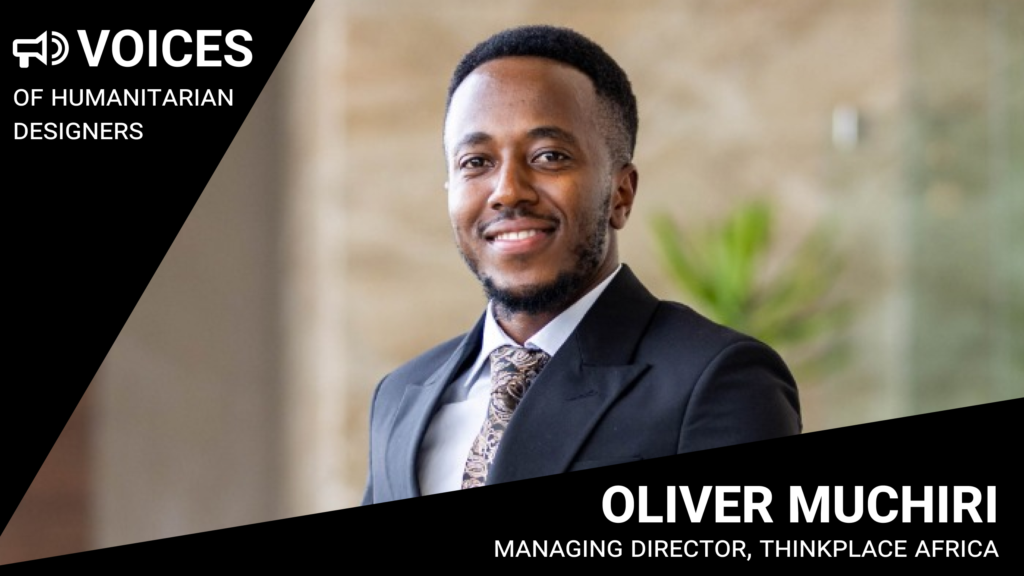
Voices of Humanitarian Designers: An Interview with Oliver Muchiri
- Interview
Introduction
What if community engagement isn’t just one step in the design process, but the very foundation that makes humanitarian design possible?
In the third edition of Voices of Humanitarian Designers, we feature Oliver Muchiri, Managing Director at the leading business design company ThinkPlace Africa (part of the ThinkPlace Global network). His work on the Gavi REACH project supported efforts to reach Zero Dose Children across humanitarian settings in Somalia, South Sudan, Sudan, and Ethiopia.
Working in contexts shaped by conflict, displacement, climate shocks, and fragile health systems, Oliver shares how humanitarian design demands far more than good ideas. It requires humility, adaptability, and a deep commitment to designing with communities, not for them.
“Community engagement is not a phase in the design process, it is the infrastructure upon which the entire process runs.”
His reflections challenge us to rethink what meaningful participation looks like, reminding us that authentic engagement cannot be reduced to a workshop or a checkbox. It is an ongoing commitment to listening, co-creating, building local capacity, closing the loop, and leaving communities stronger than we found them.
1. Can you tell us about a particular project that illustrates what humanitarian design looks like in practice?
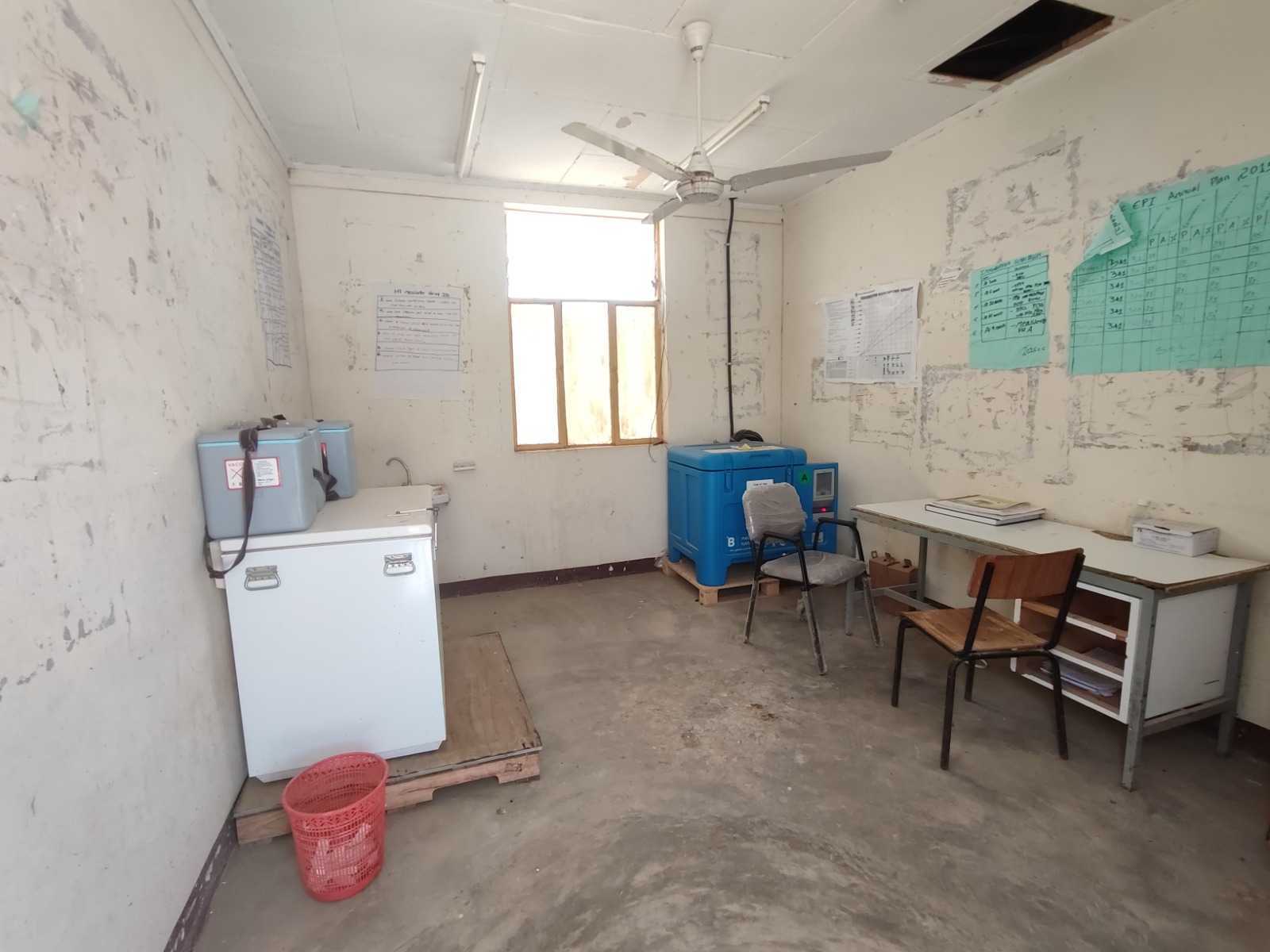
The Gavi REACH project is one of the most powerful illustrations of humanitarian design I’ve been part of. It was a consortium initiative led by the International Rescue Committee, in partnership with ThinkPlace, Flowminder and local in-country implementing partners, focused on identifying, reaching, and vaccinating Zero Dose Children in hard-to-reach areas across Somalia, South Sudan, Sudan and Ethiopia – fragile, conflict-affected, and cross-border contexts where national immunisation programmes have limited or no access.
ThinkPlace’s role centred on Human-Centred Design, Behavioural Design, and Systems Thinking, working with country teams to understand and co-create solutions addressing both the demand and supply barriers to immunisation. The process followed a deeply iterative HCD methodology: desktop reviews, Targeted Design Assessments, community validation workshops, persona development, ideation, and prototyping from low to high fidelity as well as implementation technical support.
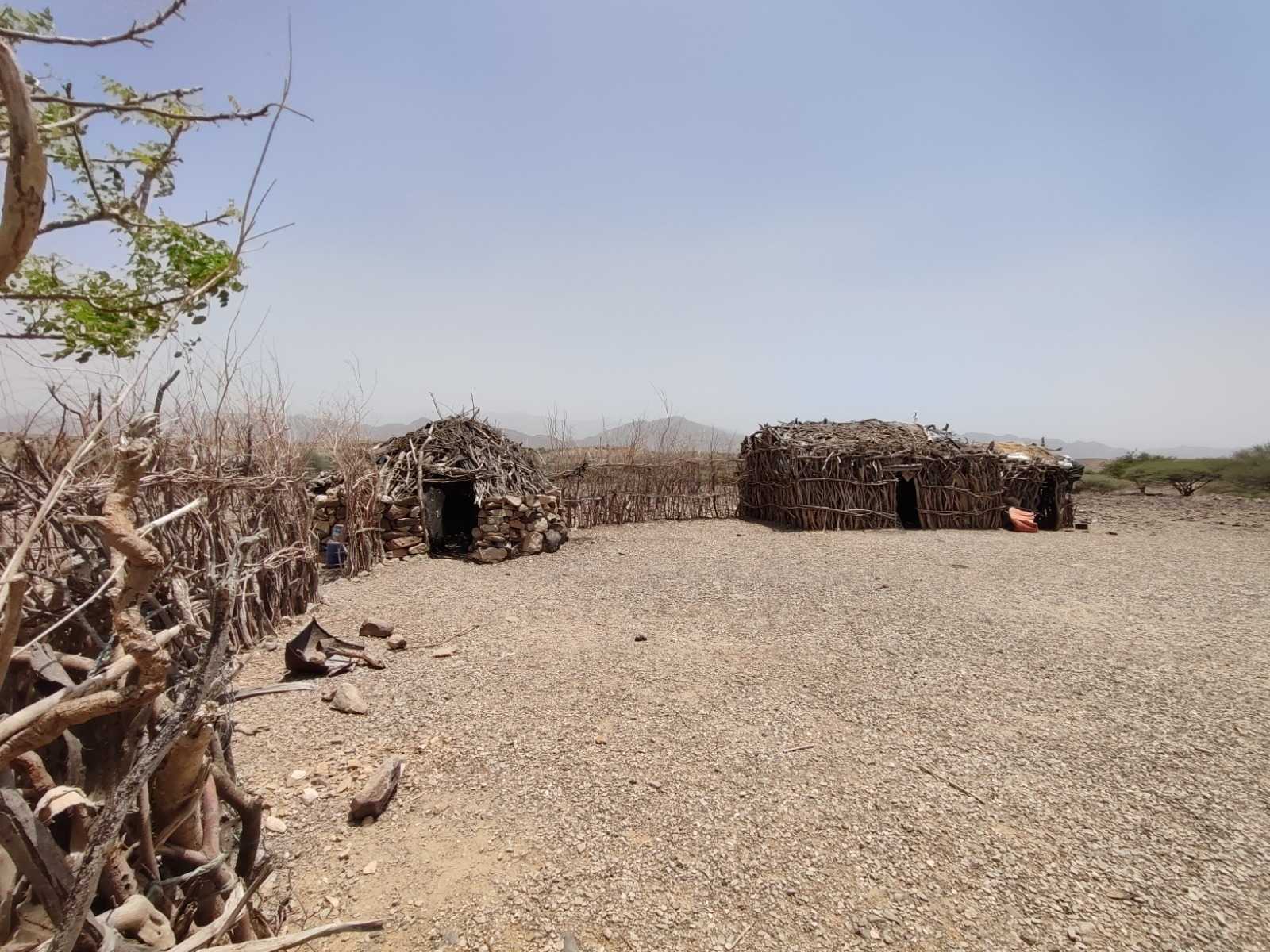
What made this distinctly humanitarian was the complexity of context. We worked across eight ZIP(Zero Dose Immunisation Programme) personas, each representing a different combination of conflict, fragility, and cross-border dynamics, from post-conflict and geographically isolated settings to communities under active occupation by non-state actors, to those exposed to recurring floods and droughts. These were distinct communities all living within humanitarian settings, and we had to design tailored behavioural interventions for each.
In terms of personal growth, the project demanded deep adaptive capacity, learning to rapidly contextualize the HCD methodology under volatile conditions, ask the right questions, and design meaningful interventions in compressed timeframes. It reinforced for me that HCD must be flexible enough to serve settings where the full process simply isn’t feasible. That realization directly led to the development and rollout of the ThinkPlace Targeted Design Assessment – an adaptive HCD approach purpose-built for humanitarian contexts.
Trust in such settings was crucial, and we built it by positioning community engagement not as a standalone activity, but as the bedrock of the entire design process. We developed a Community Engagement Framework, analyzed and validated existing CE interventions in each country, and “ZIPified” the most relevant ones to address the specific barriers and enablers of each community.Co-creation workshops with local partners shaped new CE interventions, and a CE toolkit was rolledout across all four countries. One of the project’s most meaningful outcomes was genuine buy-in from local partners — evidence that the trust built was real, not performative.
What types of challenges have you encountered in your practice? Do you have a quote or principle that frames your work?
The Gavi REACH project surfaced several challenges that I think are inherent to humanitarian design:
The first was the need to adapt HCD itself to humanitarian realities. The full HCD process is rarely feasible in these settings, which is what led us to develop the Targeted Design Assessment as a fit-for-purpose alternative.
The second was operating across volatile and harsh contexts, countries experiencing severe conflict, fragility, and cross-border population dynamics. Research tools, engagement methods, and intervention designs had to be constantly adjusted to shifting security conditions and community circumstances.
Third, resourcing constraints on the partner side frequently hindered implementation. Even well-designed interventions can stall when the partners executing them are themselves operating under severe capacity limitations, and designing with that reality in mind is part of the work.
A principle that has stayed with me from this project comes from ThinkPlace’s community engagement methodology:
“Public trust is eroded when engagement is done for the sake of it or as a box-checking exercise. Regardless of the country or context, community engagement must be authentic. A community can quickly discern ingenuine attempts that do not take into account the context of the issue, or that fail to give community voices a genuine chance to be heard.”
That became the ethical backbone of everything we did on REACH.
3. Is there something you've learned that changed the way you approach humanitarian design today?
The most transformative lesson from REACH was this: community engagement is not a phase in the design process, it is the infrastructure upon which the entire process runs. Our project documentation captured it clearly: “community engagement interventions are the ‘drivers’ upon which all other HCD interventions will be rolled out. It is the bedrock of the HCD process, not a standalone activity.”
That shifted something fundamental in how I approach this work. Community engagement is no longer something we do at the beginning to gather insight or at the end to validate. It is continuous, living, and present at every stage.
The second major learning came from the development of the eight ZIP contextual scenarios. Mapping out such distinct combinations of conflict, fragility, and cross-border dynamics made it undeniable that a one-size-fits-all approach simply does not work in humanitarian contexts. Each scenario required its own constellation of CE interventions, tailored to its specific barriers and enablers. This “ZIPification” process, determining which existing interventions could be adopted, or newly designed for each community, became the project’s most significant methodological contribution.
4. What would you tell someone new to humanitarian design about what really matters?
A few things I’d hold closely:
1. Design with people, not for them. What drives me most is getting the process right, anchoring design to the real world, to people in all their complexity. In humanitarian contexts, that means communities must be embedded in every stage: research, co-creation, prototyping, and refinement.
2. Invest deeply in understanding context before designing anything. On REACH, we spent significant time on desktop reviews and TDA research before moving to ideation. Eight distinct scenarios were needed just to capture the variety of situations in which zero-dose children existed within the same humanitarian setting. Skipping that step produces interventions that simply don’t fit.
3. Build local capacity, not dependency. The project identified HCD capacity-building for local teams as a priority next step, so that they could continuously refine and design new interventions independently. The goal is to leave behind capability, not just deliverables.
4. Embrace iteration and hold it lightly. REACH called for ongoing post-implementation learning, understanding what’s working, documenting it, and testing whether interventions from one ZIP scenario could be adapted for similar contexts elsewhere. That willingness to learn and adjust is not a sign of uncertainty; it’s the work.
5. Where do you find inspiration outside of your professional work?
There is a quote that has become my life’s philosophy: the journey is the reward. It is a simple idea, but it carries real weight for me. It is a reminder that the destination is rarely the point, what matters is how fully you show up in the moments that make up the journey. I try to bring that same presence to everything: time with family, wild moments with friends, demanding stretches of work with colleagues. My aim is not to rush toward the end of anything, but to be genuinely in it, to appreciate life as it is happening.