Voices of Humanitarian Designers: An Interview with Michael Njogu
- Interview
Introduction
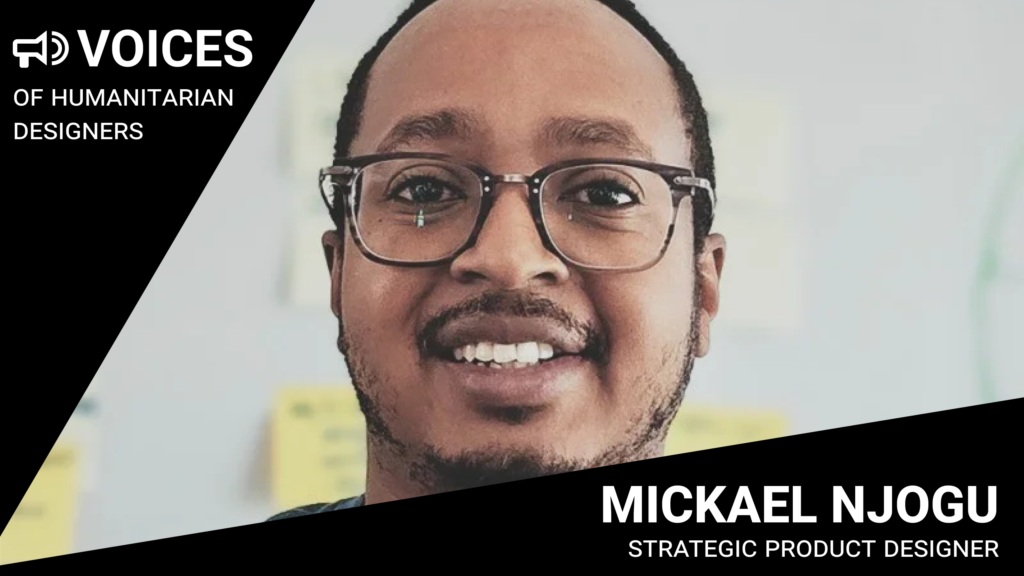
Michael Njogu is a Strategic Product Designer.
A product and delivery-oriented professional with a background in UX and product design, experienced in building and operating complex digital products and internal systems across corporate, non-profit, and humanitarian environments. His work sits at the intersection of user research, product strategy, and execution, often in contexts with high constraints, multiple stakeholders, and real-world impact.
Can you tell us about a particular project you’ve worked on that illustrates what humanitarian design looks like in practice? How has this project impacted your personal growth? Were you able to build trust and make the design process work?
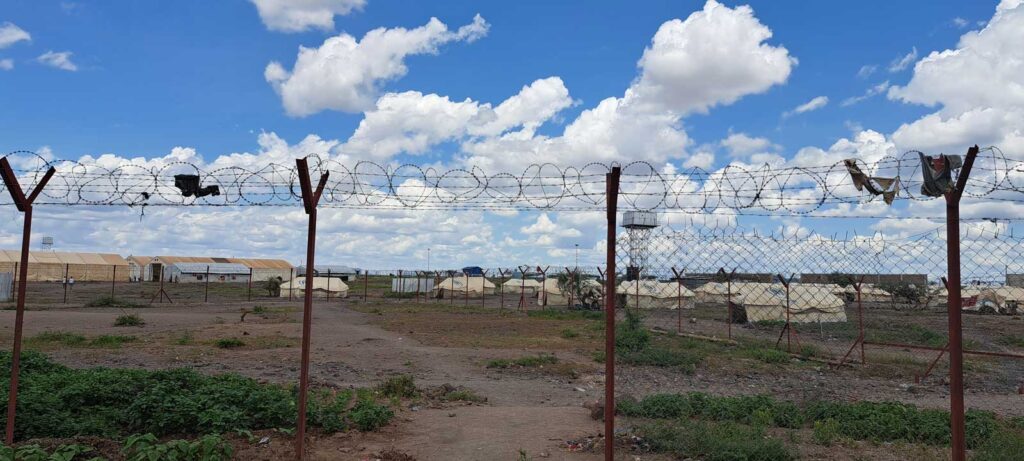
One project that shaped my understanding of humanitarian design was my involvement in supporting Restoring Family Links (RFL) services with the International Committee of the Red Cross (ICRC) during two field missions to Kakuma Refugee Camp in Northern Kenya (2023-2024). For more than 300,000 refugees living in Kakuma, being able to contact a separated family member is crucial. When I joined the initiative, the service was facing a 70% budget cut. At first, the question seemed straightforward: How do we continue with fewer resources? But once we arrived in the field, the question changed to: How do we redesign the service to keep it sustainable and dignified? What I found challenged my original assumptions. Connectivity was capped at two-minute calls and fifteen minutes of Internet. Devices were old and failing. Offices were overcrowded. Yet the Kenya Red Cross staff and volunteers showed up every day to keep the services running. Because direct interviews with beneficiaries weren’t always appropriate in a tense operational environment, I adapted my research approach: shadowing volunteers, observing the infrastructure, and treating frontline staff as the field experts. Through this, I learned that good research adapts to context. One of the turning points came when we reframed the problem. Instead of accepting scarcity as inevitable, we examined whether resources were being used effectively. Working closely with ICT and other key stakeholders, we uncovered that pay-per-use connectivity was significantly more expensive than fixed subscriptions. This opened the door for new possibilities, such as bundled voice & data plans, piloting Starlink and investing in repairable devices, ultimately shifting the conversation from rationing services to expanding them responsibly. This changed how I define success. It’s not always about launching something new; sometimes, it’s about restructuring what exists so that more people can access it with dignity.
What types of challenges have you encountered in your practice? Do you have a quote, guidelines, something that frames or gives purpose to your work?
Infrastructure is fragile, resources are finite, and decisions have real human consequences.
One persistent challenge I’ve encountered is resisting the choice of speed over care.
Urgency is often real, but moving too quickly without community involvement can create solutions that look good on paper but don’t address the real problem.
Another challenge is confronting institutional narratives. In Kakuma, the phrase “there’s no money” had become an accepted truth. Yet when we examined the system more closely, the issue was not simply funding; it was spending models and assumptions that had gone unquestioned.
Is there something you’ve learned from your experience that changed the way you approach humanitarian design today?
Earlier in my career, I believed my job was to design solutions that looked brilliant.
Humanitarian work taught me something better: our greatest contribution as designers is often reframing the problem itself.
I’ve also learned that not every problem requires innovation; sometimes the most
responsible act is extending the life of something that already works.
This work has made me more patient, more systemic in my thinking, and more attentive to unintended consequences.
What would you tell someone new to humanitarian design about what really matters when doing this kind of work?
Be humble. Listen. Observe. Don’t be quick with solutions.
Technical skills matter, but your mindset determines impact. Understand the context you’re working in before proposing changes. The communities you serve are already experts in their own realities.
Spend your first days observing and asking questions, not sketching solutions. Recognize that sometimes, the best intervention is to support what exists, not replace it.
Progress may feel much slower than the pace of commercial design, but small
improvements in humanitarian settings often carry profound weight.
Where do you find inspiration or perspective outside of your professional work? This could be something personal, creative, or simply grounding.
Outside of design, I’m naturally drawn to learning, especially things that challenge me to think differently from my day-to-day work. There’s something satisfying about starting from zero and allowing yourself to grow without the pressure of expertise.