Voices of Humanitarian Designers: An Interview with Madigan Johnson
- Interview
Introduction
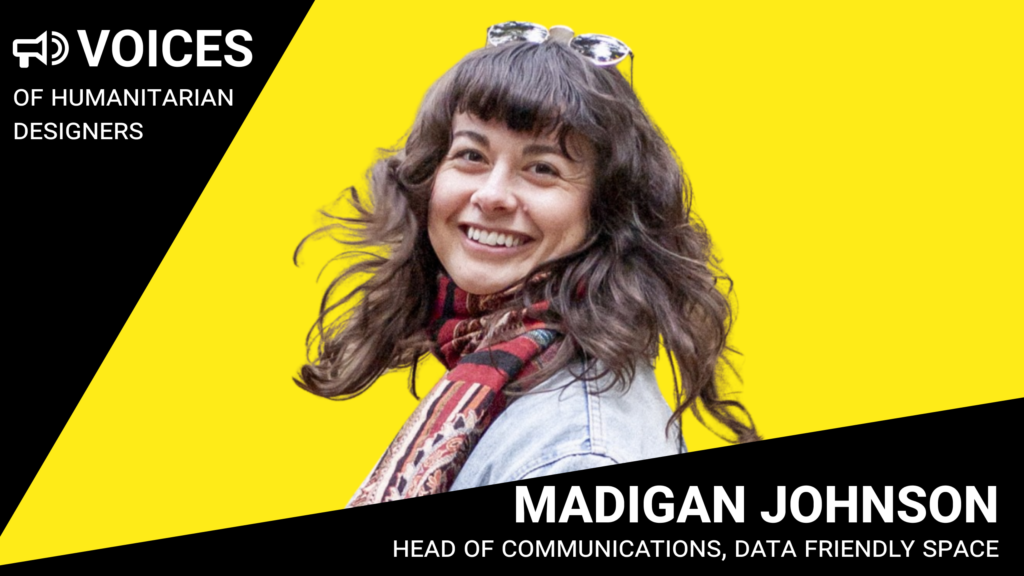
Madigan Johnson is a digital expert specialising in user behaviour, design, and storytelling. Following her Master’s in International Humanitarian Action through the NOHA network, Madigan pivoted to the private tech sector where she honed her UX capabilities at a digital agency working with major e-commerce players and social impact startups. Her talent for understanding user behaviour and creating engaging digital experiences led her to the Spirits industry, where she successfully led one of the largest online Spirits communities in the United States. Throughout her journey in tech, Madigan has maintained her commitment to creating meaningful impact, expertly leveraging user-led methodologies and data analytics to shape exceptional digital experiences. She has now pivoted to storytelling and communications as the Head of Communications at Data Friendly Space (DFS), where she brings her comprehensive expertise in digital technology, content strategy, and community engagement to drive innovation with purpose. When she is not on a computer, you can find her out in nature with her dog, reading as many books as possible, and swimming in lakes.
Tell us about a project that shows what humanitarian design looks like in practice.
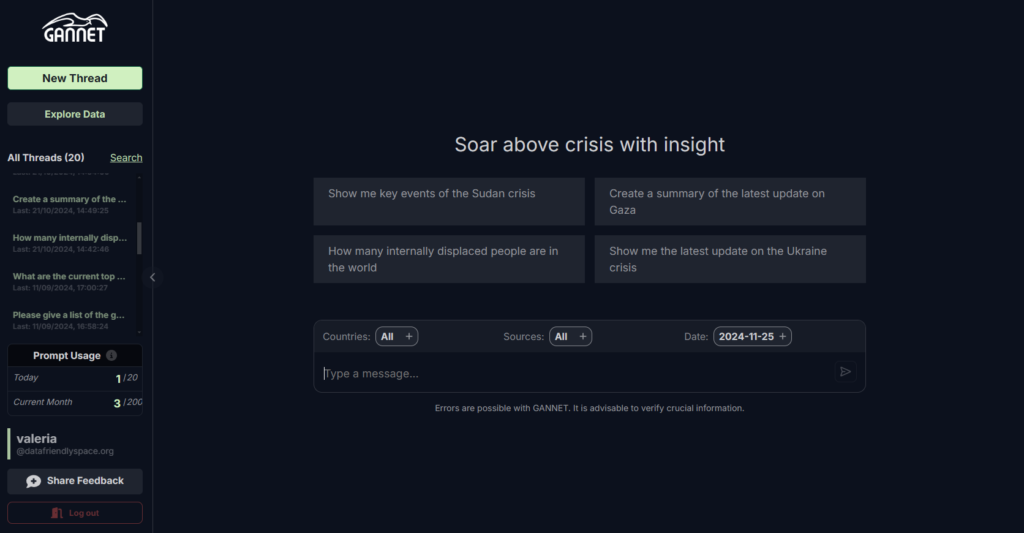
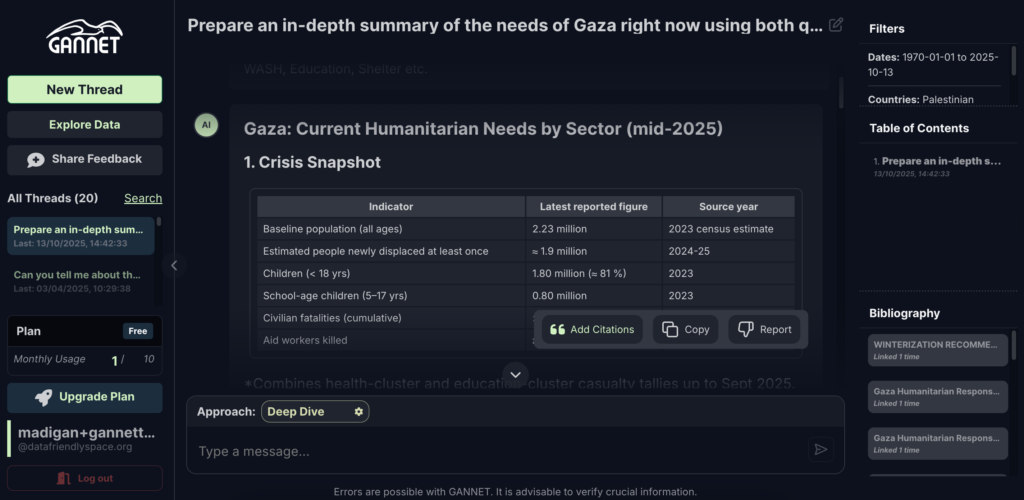
I have been working for a few years now on co-creating user experiences and interfaces for AI-powered tools designed to help humanitarians quickly locate information in crisis. Although the technology functions properly, trust in the AI did not materialise. People weren’t concerned about the application being faulty; rather, they were worried that the app would replace their judgement and about where their data would end up.
So I talked with people, I asked questions, and then listened. The turning point wasn’t a feature; it was agreeing, out loud, on what the tool should and should not be allowed to do. After people had been given a chance to contribute to setting those boundaries, the designs that the team and I had been working on began to make sense. That experience taught me to talk less and to listen more. Previously I believed that good design meant having the correct answer ready; nowadays I believe it means keeping a question open long enough for someone else to provide an answer, listening to the different responses that are given, and making it possible for them to say “stop” if the answer turns out to be wrong.
What challenges have you faced, and what guides your work?
The recurring one is fear. People are worried about being replaced, about being monitored, about being studied instead of listened to. You can’t design your way out of fear with better UX. You design your way out of it by showing up, again and again. My guide is a simple line: design with, not for. Most of my challenges can be traced back to not designing with people, but forging on ahead with what I think is the correct answer. There is also the importance of detaching your ego. If people tell you that the design doesn’t work for them, don’t get defensive; instead, let that go and approach the situation with curiosity. It usually takes you down some interesting paths you would not have gone down otherwise.
Has anything changed how you approach the work today?
Yes, I used to chase polish as a perfectionist; I always wanted everything in a tidy, clean box. Now I focus on feedback loops instead. A rough tool that people actually talk back to beats a beautiful one they quietly ignore. Polish is what you show an audience, but feedback is what you owe the people, and it has to keep working long after launch.
What would you tell someone new to this work?
Learn to listen and remain curious. It sounds easy enough, but these are sometimes the hardest skills to learn, and nobody grades you on them in school. Pair it with real ethical discipline in how you gather information, ask why you need each piece of data before you ask how to collect it, and ask whether the people it’s about would still recognise themselves in how it’s being used. Keep learning; there are so many wonderful ideas and perspectives to consider in this world of ours.
Where do you find perspective outside of work?
I read constantly, across fields, on purpose. A non-fiction book about human rights or a fantasy novel will teach me more about design, because what we are all designing for, in a way, is the human experience. Reading allows me to disconnect and let my imagination come alive, letting my mind connect dots that maybe would not have connected.